
Dental Fillings : Definition and Types

Most people are familiar with dental filling, as it is one of the most performed dental treatments. A dental filling is used to treat damaged teeth, returning them to their normal appearance and function and preventing them from further damage. One of the best ways to prevent having to have a dental filling is to practice good oral hygiene techniques.
There are many different types of dental filling materials. This includes tooth-colored composite resin, silver amalgam, gold, and porcelain. This article will give complete information about Dental Filling.
The Centers for Disease Control and Prevention (CDC) reported that approximately 91% of American adults have at least one dental filling.
A filling is a material that your dentist uses to fill a cavity after the dentist removes any tooth decay. To fill a tooth, your dentist will numb the area, drill out the decay, and put in a filling. There are many types of fillings.
Types of Dental Fillings Material
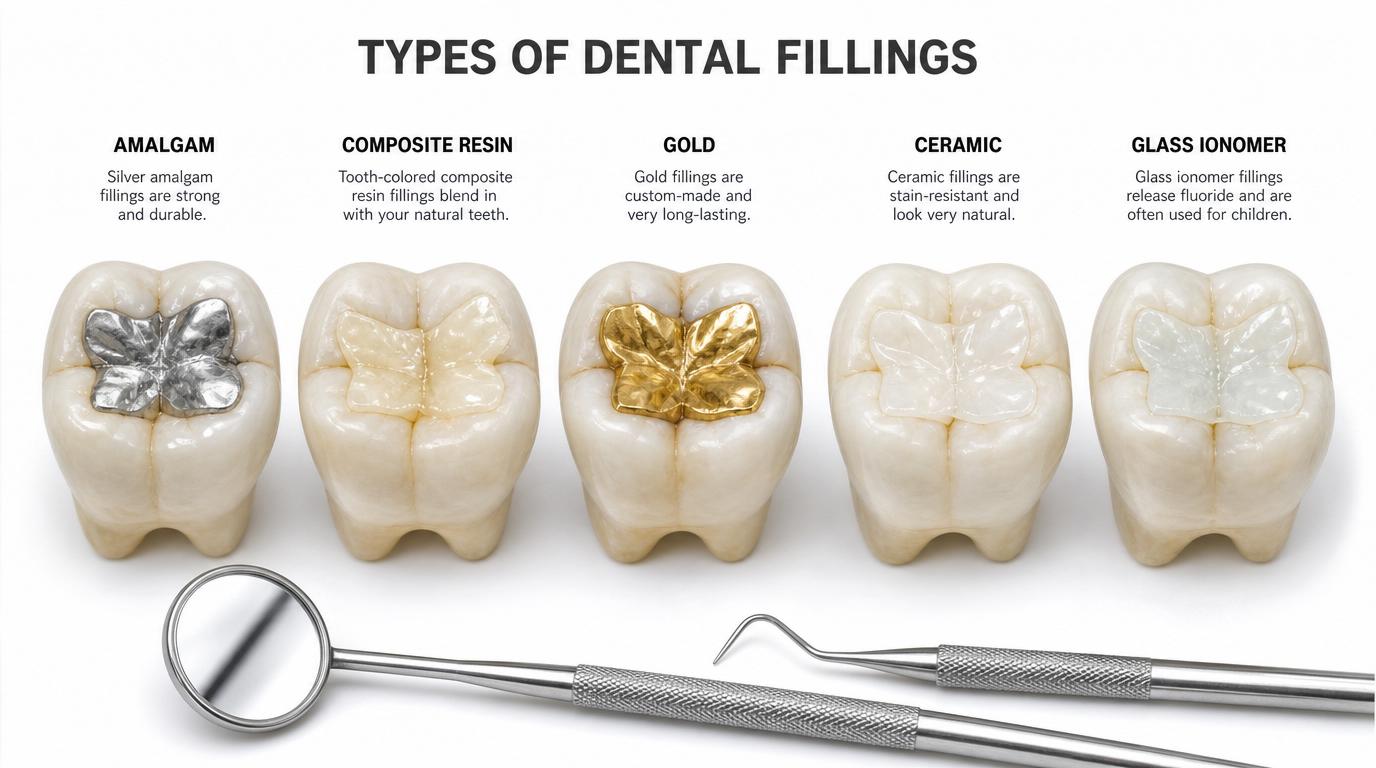
There are a variety of types of dental fillings. Continue reading to see what dental filling material might suit you best.
- Amalgam Fillings
Amalgam is a well-known dental filling. Amalgam fillings tend to last significantly longer than composite resin fillings due to their strength. They are often placed on the chewing surfaces of the back teeth such as the molars. In general, amalgam fillings are less expensive than other types of fillings, but can be considered less esthetic due to their silver color.
- Composite Fillings
Composite fillings come in a variety of tooth-colored shades to make the restoration less noticeable. These restorations are becoming increasingly popular due to their discreet appearance. They are also fairly strong, but in general don’t last as long as fillings made from metals.
- Gold Fillings
Gold is also another material used for cavity fillings. Gold fillings share similar durability to amalgam fillings. Over time, they have lost popularity, but are still a great treatment option.
- Ceramic Fillings
A ceramic filling is typically made of porcelain. This filling is tooth-colored and more resistant to staining than composite fillings.
- Glass Ionomer Fillings
Glass ionomer fillings often have the added benefit of releasing fluoride to the teeth. Fluoride can help strengthen the teeth and fight bacteria. In comparison to the other types of fillings, glass ionomers are usually less durable.
What To Expect
After your dentist has filled the cavity, your lips and gums may stay numb for a few hours until the numbing medicine wears off. To avoid injuring your mouth, be careful not to chew on your numb lip or cheek.
Your filled tooth may be sensitive to heat and cold for days to weeks after you get the filling. Talk to your dentist about toothpastes that may help you with this discomfort. Tell your dentist if your teeth are too sensitive after you get a filling. This problem can usually be treated.
Why It Is Done
You need a filling when tooth decay has caused a hole (cavity) to form on a tooth surface. If you don’t get a filling, the cavity will get worse. It may cause pain and then an abscess, Opens dialog. This may lead to more severe problems, such as bone loss.
How Well It Works
A filling repairs the tooth and stops tooth decay. Over a long period of time, you may need to replace a worn-out filling.