
Cavities Uncovered: Risks, Progression, and Effective Management of Tooth Decay
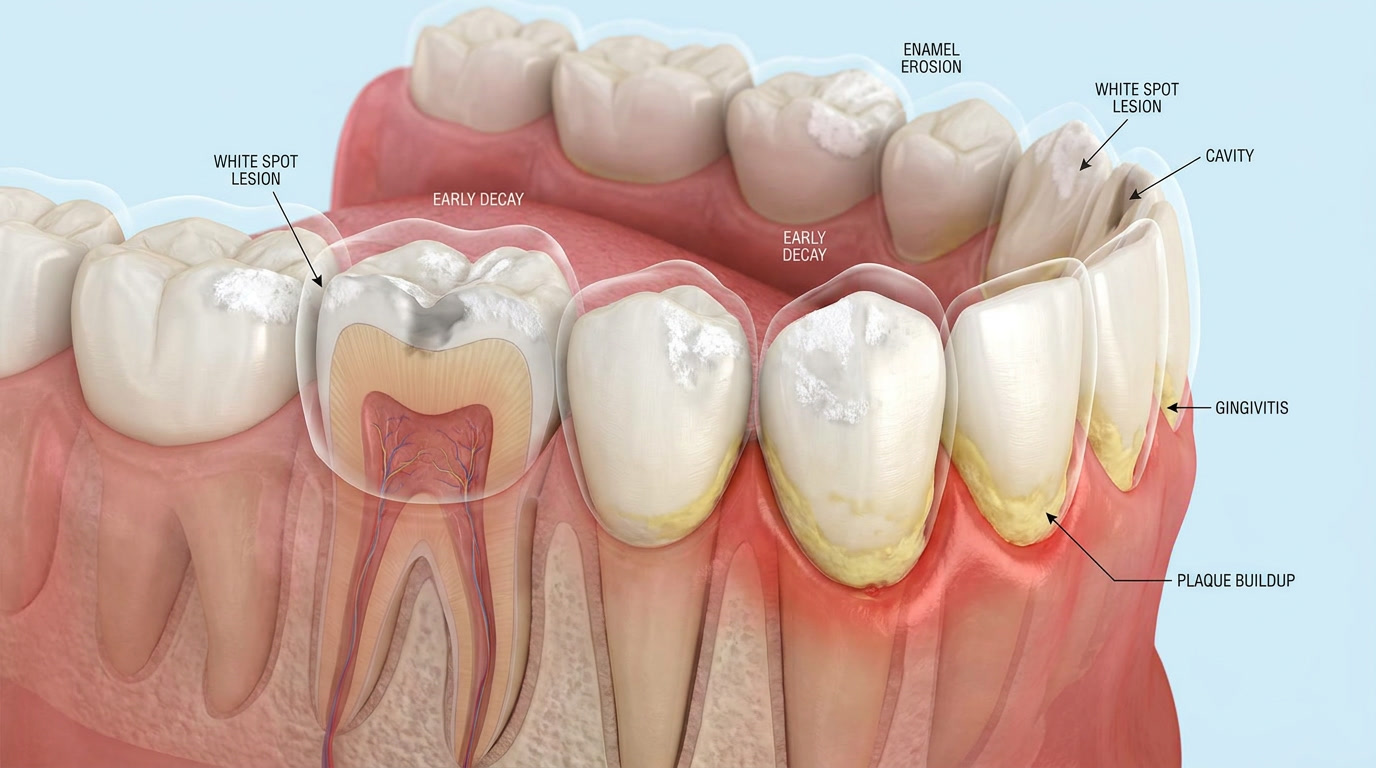
What is a cavity?
A cavity is a hole in a tooth that develops from tooth decay. Cavities form when acids in your mouth wear down (erode) your tooth’s hard outer layer (enamel). Anyone can get a cavity. Proper oral hygiene and regular dental cleanings can prevent cavities.
Another name for tooth cavities is dental caries.
Risk factors
Anyone who has teeth can get cavities, but these factors raise the risk:
- Tooth location. Decay most often occurs in your back teeth — your molars and premolars. These teeth have lots of grooves, pits and crannies, and multiple roots that can collect food particles. That’s why they’re harder to keep clean than your smoother, easy-to-reach front teeth.
- Certain foods and drinks. Foods that cling to your teeth for a long time are more likely to cause decay than foods that are easily washed away by saliva. These foods include milk, ice cream, honey, sugar, soda, dried fruit, cake, cookies, hard candy and mints, dry cereal, and chips.
- Snacking or sipping a lot. When you snack or sip sugary drinks a lot, you give mouth bacteria more fuel to make acids that attack your teeth and wear them down. And sipping soda or other acidic drinks throughout the day helps create a continual acid bath over your teeth.
- Bedtime baby feeding. When babies are given bedtime bottles filled with milk, formula, juice or other liquids that have sugar, these beverages remain on their teeth for hours while they sleep. This feeds bacteria that can cause decay. This damage often is called baby bottle tooth decay. Similar damage can occur when toddlers wander around drinking from a sippy cup filled with these beverages.
- Not brushing your teeth well. If you don’t clean your teeth soon after eating and drinking, plaque forms quickly, and the first stages of decay and gingivitis can begin.
- Not getting enough fluoride. Fluoride, a naturally occurring mineral, helps prevent cavities. It also can reverse the earliest stages of tooth damage. Because of its benefits for teeth, fluoride is added to many public water supplies. It’s also a common ingredient in toothpaste and mouth rinses. But bottled water usually does not contain fluoride.
- Younger or older age. In the U.S., cavities are common in very young children and teenagers. Older adults also are at higher risk. Over time, teeth can wear down and gums may recede, making teeth more likely to decay. Older adults also may use more medicines that reduce saliva flow, raising the risk of tooth decay.
- Dry mouth. Dry mouth is caused by a lack of saliva. Saliva helps prevent tooth decay by washing away food and plaque from your teeth. Substances found in saliva also help counter the acid produced by bacteria. Certain medicines, some medical conditions, radiation to your head or neck, or certain chemotherapy drugs can raise your risk of cavities by reducing saliva production.
Tooth decay stages

Cavities can affect all layers of your tooth.
There are five main tooth decay stages:
- Demineralization: During this first stage, you may notice small, white, chalky spots on your tooth. This is due to the breakdown of minerals in your tooth enamel.
- Enamel decay: Left untreated, tooth decay progresses and continues to break down your enamel. At this point, cavities (holes) may become noticeable. White spots may turn to a light brownish color.
- Dentin decay: Dentin is the layer just beneath your tooth enamel. It’s much softer than your enamel. So, once plaque and bacteria reach this layer, cavities form faster. At this stage, you may notice teeth sensitivity. The spots on your teeth may also turn to a darker brown.
- Pulp damage: Your tooth pulp is the innermost layer of your tooth. It contains nerves and blood vessels that transport nutrients and keep your tooth alive. When cavities reach your pulp, you may feel pain. You may also start to notice redness and swelling in the gums around your tooth. The spots on your tooth may turn darker brown or black.
- Abscessed tooth: Left untreated, a deep cavity can cause infection. This results in a pocket of pus that forms at the tip of your tooth root (periapical abscess). Symptoms may include pain that radiates into your jaw or face. You may also develop facial swelling and swollen lymph nodes in your neck. At this point, a tooth abscess can spread to surrounding tissues and other areas of your body. In rare cases, infection can even spread to your brain or to your bloodstream (sepsis).
Management and Treatment

How do you get rid of cavities?
Tooth decay treatment depends on the severity of your condition.
Cavity treatments include:
- Fluoride.
- Fillings.
- Root canal therapy.
- Tooth extraction.
Cavities are more than just minor dental issues, they can progress silently and lead to significant pain, infection, and tooth loss if untreated. Understanding the risk factors, stages of decay, and available treatments empowers you to protect your teeth and maintain long-term oral health through timely dental care and proper hygiene.